
Located in northern Guatemala, Tikal was once the major cultural and population center of the Maya civilization, circa 200 to 900 BC. Some of the earliest temples of this ancient urban site date back to 4th century BC, and attracted its first residents sometime in the 6th century BC.
There is a couple of possible reasons for the abandonment, at the end of the 9th century AD. First, the
Maya's long history of warfare, because its belligerent policy.
Second, a mixture of overpopulation, enviromental degradation and
drought.
Since the time of this collapse, almost no one has lived in the area. The forests have grown back and now, the abandoned ruins of Tikal are surrounded by a national park, a 57,600 hectares sanctuary of rainforest and wetlands for endangered wildlife.
In comparison, the center of the city is small: about 400 hectares of temples, pyramids, ceremonial structures, houses, terraces, causeways and plazas, surrounded by another thousand hectares of residential neighborhoods and reservoirs.
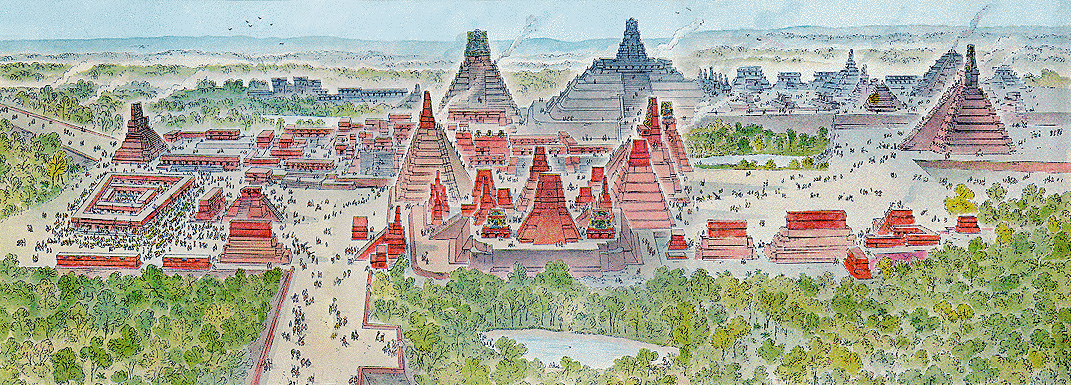
At the heart of the city was a system of springs — an important source of water. The Tikal residents channeled the water from the springs and built plazas
that collected rainwater, channeling both into the reservoir. These
technologies allowed the city to expand its agricultural productivity
and support a growing of population.
Over
hundreds of years, as the city grew into one of the most important
places in the region, the Maya who lived there harvested wood in the
surrounding forest and used some of the newly open land for
agricultural.
This Maya people managed their resources as sustainably as possible. But the changes Tikal’s residents made to their landscape left no resilience when something bad came along, it may even have made them more vulnerable in
the face of a climatic change. And things change.


